
Heat Pump Installation, Servicing & Repairs in Uxbridge & Harrow
Looking for heat pump services in Uxbridge, Harrow or the surrounding areas? BoilerCare Cover provides domestic heating services to help homeowners understand their options for heat pump installation, ongoing maintenance and repairs.
Heat pumps offer an alternative to conventional gas and oil heating systems by transferring heat from the surrounding environment into your home. An air-source heat pump, for example, extracts heat from outdoor air and uses it to provide heating and, in suitable systems, hot water.
A Complete Range of Heat Pump Services
Choosing the right heat pump service depends on whether you're planning a new installation, maintaining an existing system or dealing with a fault.
Explore our dedicated service pages to find more information about the options available.
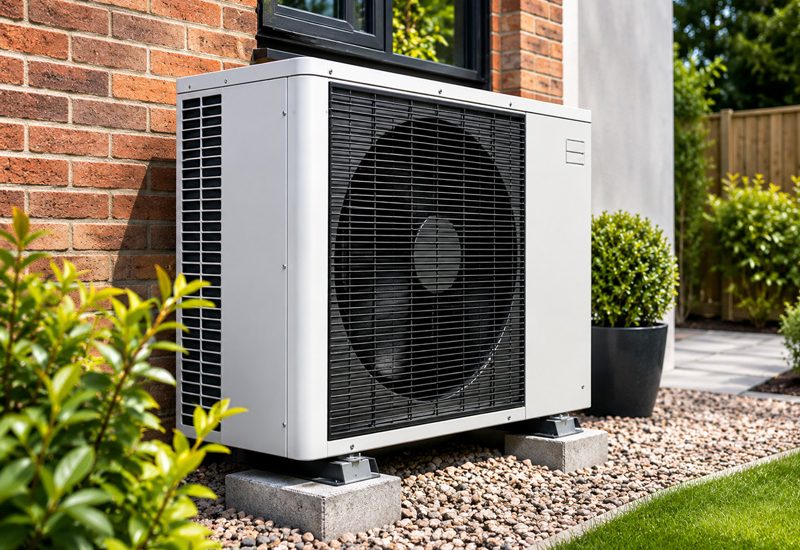
Air-Source Heat Pumps
Air-source heat pumps transfer heat from outdoor air into your property. They can provide an alternative to traditional heating systems, although their suitability depends on factors such as insulation, the property's heat demand, available outdoor space and the existing heating distribution system.
If you're considering a heat pump for your home, our dedicated page explains how air-source systems work, what to consider before installation and the practical requirements involved.
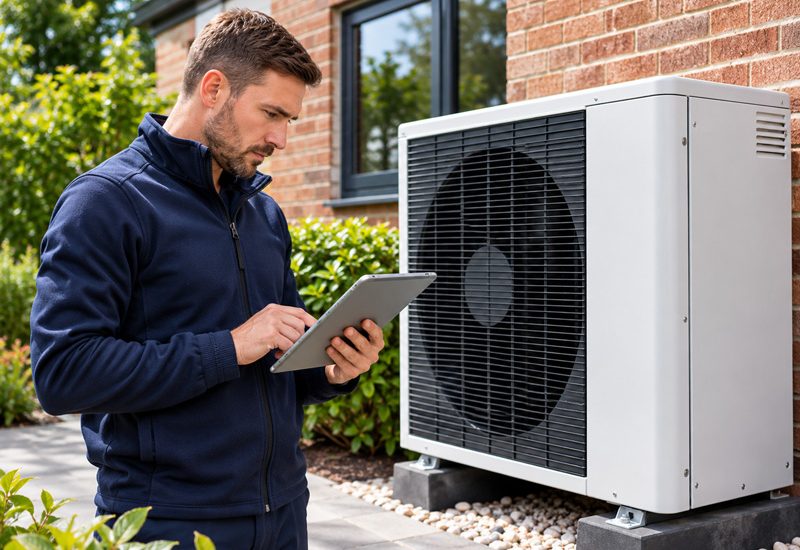
Heat Pump Servicing, Maintenance & Repairs
Like other heating equipment, heat pumps require appropriate maintenance to help them operate as intended. Outdoor units, filters, airflow, controls and other system components may need attention in line with the manufacturer's instructions and the equipment's condition.
If your heat pump is not heating your home as expected, is displaying a fault or has developed an unusual noise, a professional assessment can help identify the cause.
Our dedicated servicing and repairs page explains common maintenance considerations, potential warning signs and how to arrange assistance.
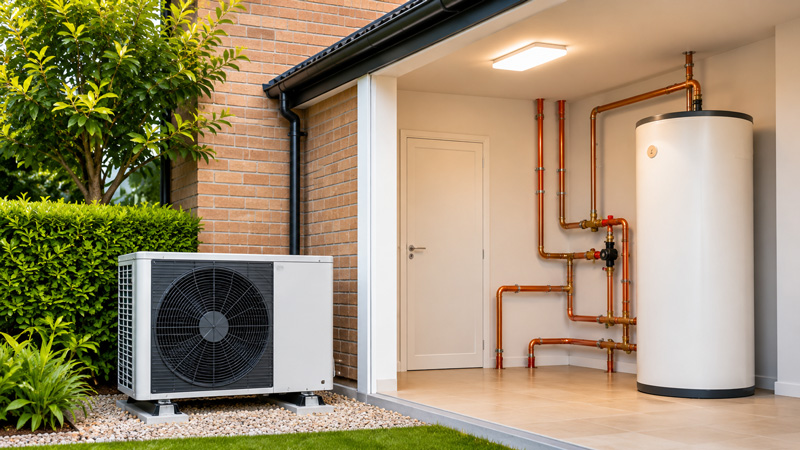
How Do Heat Pumps Work?
A heat pump transfers heat from outdoor air into your home using electricity. The system extracts thermal energy, increases its temperature and uses it to provide heating and, where designed for it, domestic hot water.
- Uses renewable heat from the air
- Efficient and reliable home heating
- Can also provide hot water (system dependent)
These measures do not replace a professional inspection where one is required.
What Does a Heat Pump Consist Of?
A typical air-source heat pump system may include:
- Outdoor unit: Extracts heat from the surrounding air.
- Heat transfer system: Moves energy through the heat pump's refrigerant circuit.
- Indoor equipment: Connects the heat pump to the home's heating and hot-water arrangements, depending on the system design.
- Heating distribution: Radiators, underfloor heating or another suitable system transfers heat into the rooms.
- Controls and thermostats: Help manage temperatures and heating schedules.
- Hot-water cylinder: May be required where the system provides stored domestic hot water.
The exact arrangement varies by manufacturer, property and system type. A professional assessment helps determine which components are required.
Is a Heat Pump Suitable for Your Home?
Heat pumps can work in a range of domestic properties, but there is no single system that suits every home.
Before recommending an installation, it is important to consider how the property retains heat, how much heating it requires and whether the existing heating system can operate effectively with the proposed equipment.
Property Insulation
A well-insulated property generally loses less heat, which can help reduce the amount of energy required to maintain comfortable indoor temperatures.
Insulation improvements, draught reduction and suitable ventilation may therefore be worth considering when planning a heating upgrade. The appropriate measures depend on the property's current condition.
Radiators & Underfloor Heating
Heat pumps commonly operate with lower water temperatures than conventional boiler systems. This means the size and performance of the radiators, underfloor heating or other heat emitters can be particularly important.
Some existing radiators may be suitable, while others may need to be upgraded to provide sufficient warmth at the intended operating temperature.
The decision should be based on the heat demand of individual rooms and the design of the proposed system, rather than assuming that every existing radiator will need replacing.
Available Outdoor Space
An air-source heat pump requires an appropriate outdoor location. The available space, airflow, noise considerations, access for maintenance and position relative to neighbouring properties all need to be considered.
The installer should also assess the practical requirements for pipework, electrical connections and any necessary drainage.
Hot Water Requirements
Household hot-water demand affects the design of the overall heating system. The size of any hot-water cylinder, the number of occupants and typical usage patterns may all influence the equipment selected.
Your requirements should be considered as part of the wider system design, rather than choosing an outdoor unit in isolation.
Your Existing Heating System
If your property currently uses a gas boiler, oil boiler or another heating arrangement, the proposed heat pump system needs to be assessed against the existing setup.
Depending on the property, changes may be required to radiators, pipework, controls or hot-water arrangements. A properly planned installation identifies these requirements before work begins.
Heat Pumps vs Traditional Boilers
Heat pumps and conventional boilers work differently, so comparing them requires more than looking at the equipment price alone.
| Consideration | Air-Source Heat Pump | Conventional Gas Boiler |
|---|---|---|
| How it produces heat | Transfers heat from outdoor air using electricity. | Burns gas to generate heat. |
| Energy input | Electricity. | Natural gas. |
| Heating distribution | Often designed for lower water temperatures. | Often operates at higher water temperatures. |
| Outdoor equipment | Requires a suitable outdoor location. | Usually does not require a comparable external heat-pump unit. |
| Existing radiators | May be suitable, subject to system design. | Often compatible with the existing heating system. |
| Installation requirements | May involve changes to heating distribution and hot-water arrangements. | Depends on the replacement boiler and existing installation. |
| Running costs | Depend on electricity tariffs, system efficiency, heat demand and controls. | Depend on gas prices, boiler efficiency, heat demand and controls. |
| Suitability | Depends on property conditions and system design. | Depends on gas availability and the property's heating requirements. |
Neither option is automatically the cheapest choice for every household. A meaningful comparison should consider installation costs, expected energy use, maintenance, tariffs and how well each system meets the property's heating demand.
If you're unsure which option is appropriate, a property-specific assessment is more useful than relying on general estimates.
Already have a boiler and need help with it? Visit our separate Boilers section for information about boiler servicing, repairs and installation.
Understanding Heat Pump Running Costs
One of the most common questions homeowners ask is whether a heat pump will cost less to run than their current heating system.
The answer depends on several factors, including the property's heat demand, the heat pump's seasonal performance, electricity prices and how the heating system is controlled.
Seasonal Efficiency
Heat pumps use electricity to transfer heat rather than generating all their output through electrical resistance heating. Their efficiency is commonly expressed as a coefficient of performance or seasonal performance figure.
A heat pump's performance changes with operating conditions. Outdoor temperatures, the required water temperature and the system's design all influence how much useful heat it provides for the electricity consumed.
For this reason, published efficiency figures should be interpreted in the context of the particular product and the conditions under which the figures were measured.
Electricity Tariffs
Electricity and gas prices affect the relative cost of running different heating systems. A household's tariff and consumption pattern can therefore make a meaningful difference to the comparison.
If you're considering replacing a gas boiler, compare realistic estimates of annual energy consumption and costs rather than assuming a heat pump will always be cheaper to run.
Heating Controls
Appropriate controls help a heating system respond to the property's needs. Heat pumps are often designed to maintain comfortable temperatures over longer periods rather than relying on the same short, high-temperature heating cycles commonly associated with some boiler setups.
The correct operating strategy depends on the equipment, property and manufacturer's guidance.
Property Heat Loss
The amount of heat escaping through walls, roofs, floors, windows and draughts influences how much energy is needed to keep the home warm.
Understanding the property's heat loss helps inform the size of the heat pump and the wider heating system. It also helps establish whether insulation improvements may be worthwhile.
Our advice: If you're considering a heat pump, ask for a property-specific assessment and an explanation of the assumptions behind any proposed running-cost estimates.
Heat Pump Servicing & Ongoing Maintenance
A heat pump should be maintained in accordance with the manufacturer's recommendations and the requirements of the installed system.
Routine maintenance can help identify issues before they cause more significant disruption, although it cannot prevent every fault.
Depending on the equipment, maintenance may involve checking the condition of the outdoor unit, inspecting accessible components, assessing airflow, reviewing controls and checking for signs of leakage or abnormal operation.
Homeowners should also follow the manufacturer's instructions for keeping the area around the outdoor unit clear and carrying out any simple user maintenance.
Refrigerant circuit work and other specialist tasks must be undertaken by appropriately qualified professionals.
Signs Your Heat Pump May Need Attention
Consider arranging a professional assessment if you notice:
- The property is not reaching its normal indoor temperature.
- The system displays a persistent fault code.
- Energy consumption appears unusually high compared with previous use.
- The equipment makes unusual or persistent noises.
- There is visible damage or an unexpected leak.
- Heating or hot-water performance has changed significantly.
These symptoms can have different causes, so they should not be treated as proof of a particular fault.
If your system has stopped operating or is not performing as expected, our dedicated page provides further information about heat pump servicing and repairs.
Heat Pump Installation & Servicing in Uxbridge, Harrow and Nearby Areas

BoilerCare Cover focuses on domestic plumbing and heating services in Uxbridge, Harrow and surrounding UB and HA postcode areas.
If you're considering an air-source heat pump or need assistance with an existing system, contact us to discuss your property and requirements.
Before arranging work, the relevant service, equipment type and installation or maintenance requirements need to be established. Heat pump installations can vary considerably between properties, so the appropriate next step depends on your existing heating system and the work involved.
Our local service focus includes Uxbridge, Harrow and nearby communities across parts of West London and the surrounding areas.
Areas include:Uxbridge,Harrow,Hayes,Hillingdon,Ruislip,Northolt,Southall,Nearby parts of West London
FAQs About Heat Pumps
What is an air-source heat pump?
An air-source heat pump extracts thermal energy from outdoor air and transfers it into a property for heating. Depending on the system design, it can also provide domestic hot water. It uses electricity to operate and does not burn gas or oil to produce heat.
Are heat pumps suitable for older houses?
They can be suitable for some older properties, but suitability depends on the building's heat loss, insulation, heating distribution system and available installation space. An assessment should establish the heat demand and identify whether any improvements or heating-system changes are required.
Can a heat pump work with existing radiators?
Yes, some existing radiators can be used with a heat pump. However, radiators must be capable of providing enough heat at the temperatures the system is designed to operate at. Some properties may require larger radiators or other changes to the heating distribution system.
Do heat pumps work in cold weather?
Air-source heat pumps can extract heat from outdoor air even when temperatures are low. However, their output and efficiency vary with the conditions. The selected equipment must be appropriate for the property's heating demand and the local climate.
Are heat pumps cheaper to run than gas boilers?
Not in every situation. Running costs depend on the heat pump's seasonal performance, the home's heat demand, electricity and gas tariffs, the boiler's efficiency and the way each system is operated. A property-specific comparison provides a more useful estimate than a general claim.
How often should a heat pump be serviced?
Follow the manufacturer's maintenance schedule and any requirements applicable to your particular system. The appropriate checks depend on the equipment, its installation and its operating conditions.
Why is my heat pump not heating my home properly?
Possible causes include incorrect settings, restricted airflow, a system fault or a problem elsewhere in the heating system. Check the normal user controls and manufacturer's guidance, but do not dismantle the equipment. If the problem persists, arrange an assessment by an appropriately qualified professional.
Can a heat pump provide hot water as well as heating?
Yes, many domestic heat pump systems can provide both space heating and hot water. The arrangement depends on the system design and may include a dedicated hot-water cylinder.
Do I need to replace my boiler before installing a heat pump?
A heat pump installation is a system-design decision rather than simply a like-for-like appliance replacement. Whether your existing boiler is retained during any transition or removed as part of the installation depends on the proposed design, property requirements and scope of work.
Does BoilerCare Cover install and maintain heat pumps?
BoilerCare Cover offers heat pump installation, servicing, maintenance and repairs, subject to the equipment and work required. Contact us to confirm the service available for your property and the relevant installation or maintenance requirements.
Which areas do you cover for heat pump services?
BoilerCare Cover focuses on Uxbridge, Harrow and surrounding UB and HA postcode areas. Contact us to confirm whether the service you need is available at your address.
Tell Us How We Can Help
Complete the form below with a few details about your requirements, and we'll get back to you as soon as possible.
Explore Our Other Services
Discuss Your Heat Pump Requirements
Choosing a heating system is an important decision for your home. Understanding the property's heat demand, the available equipment and the practical requirements of installation can help you make an informed choice.
Whether you're exploring air-source heat pumps for the first time or need help with an existing system, BoilerCare Cover can discuss your requirements and explain the next steps.